

Complete Guide to U.S. Criminal Record Check in 2026


When You May Need Multiple U.S. Clearances
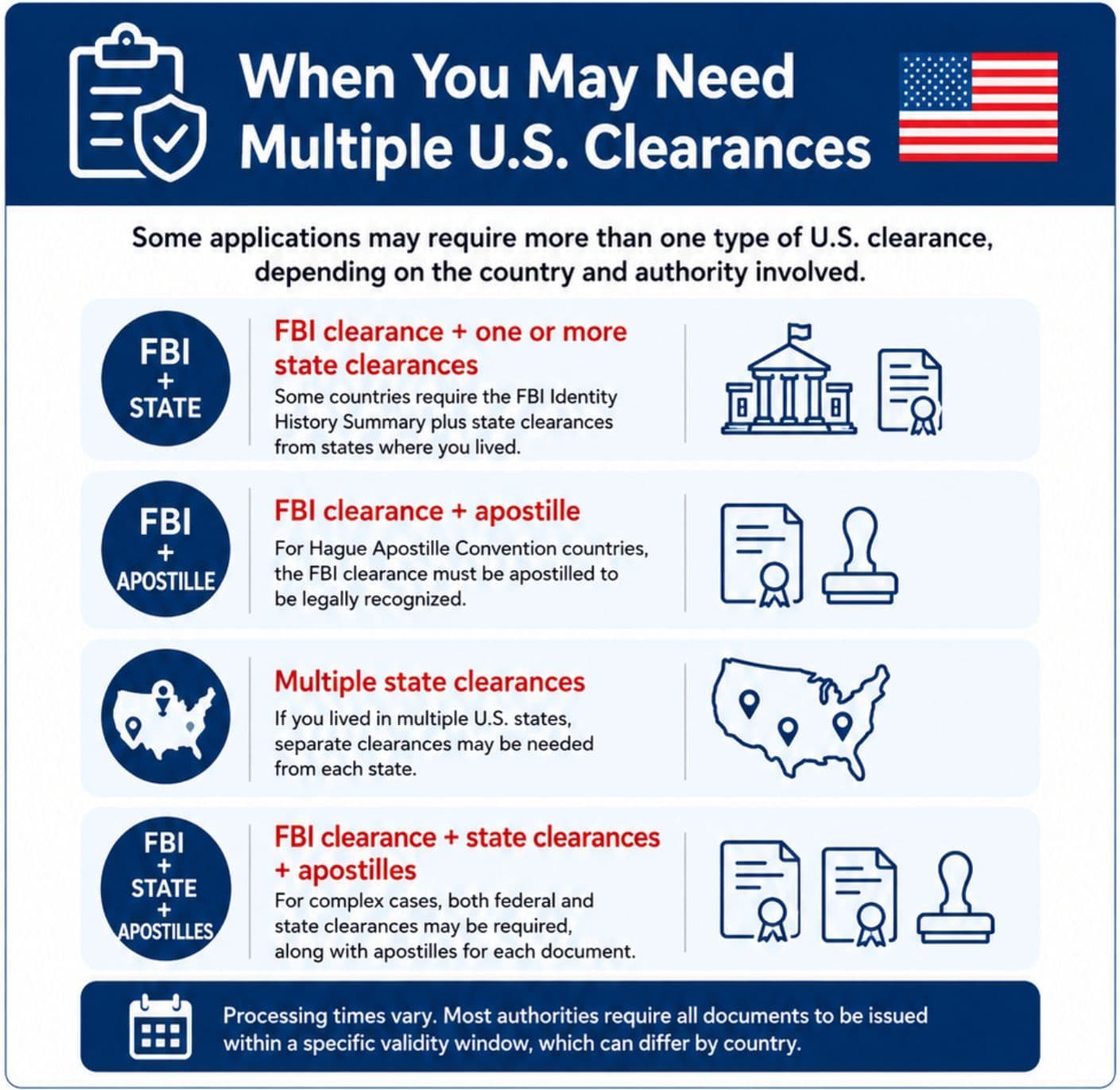
Some applications for permanent residency, citizenship, or regulated professions abroad, may require more than one type of U.S. clearance, depending on the country and authority involved.
The most common combinations are given below:
FBI clearance + one or more state clearances
Some immigration authorities require the FBI Identity History Summary as the primary federal document, along with state-level clearances from states where the applicant lived for a qualifying period. The exact requirement varies by country and visa category, so it’s important to confirm before applying.
FBI clearance + apostille
For countries that are part of the Hague Apostille Convention, the FBI clearance must be apostilled to be legally recognized. This is an authentication step and not a separate clearance. Apostilles for federal documents are issued by the United States Department of State.
Multiple state clearances
Applicants who have lived in multiple U.S. states may need separate clearances from each state. Each must be requested individually through that state’s designated authority.
FBI clearance + state clearances + apostilles
In more complex cases like intercountry adoption or certain residency applications. Both federal and state clearances may be required, along with apostilles for each document. State-issued documents must be apostilled by the Secretary of State of the issuing state, not the U.S. Department of State.
Processing times vary across agencies, and most authorities require all documents to be issued within a specific validity window, which can differ by country. You should plan timelines across all required clearances.
Clearance Validity and Expiration
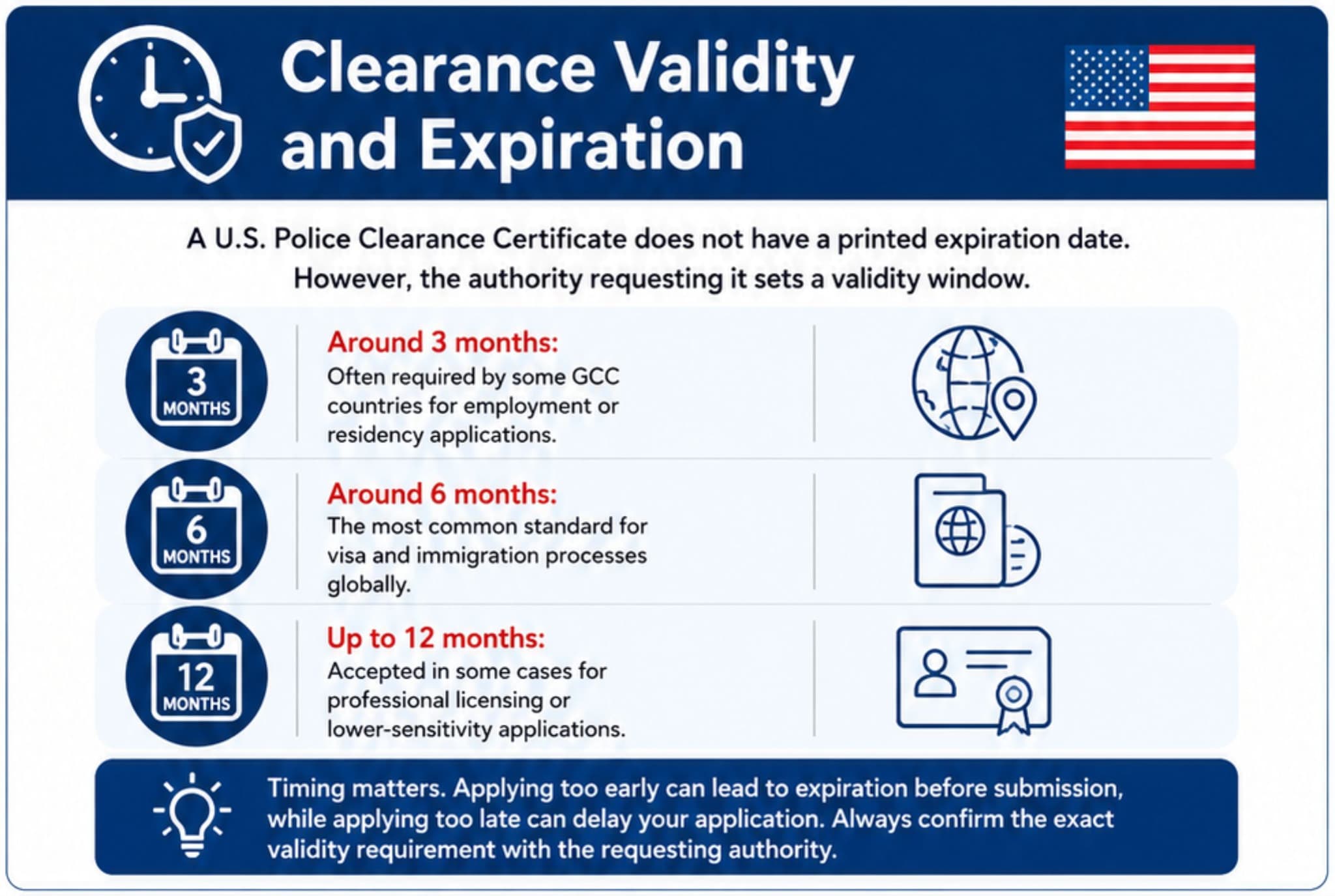
A U.S. Criminal Record Check does not have a printed expiration date. However, the authority requesting it sets a validity window. This means that the document must have been issued within a specific period before submission.
- Around 3 months: Often required by some Gulf Cooperation Council (GCC) countries for employment or residency applications.
- Around 6 months: The most common standard for visa and immigration processes globally.
- Up to 12 months: Accepted in some cases for professional licensing or lower-sensitivity applications.
Because the clearance reflects your record at the time it was issued, timing matters. Applying too early can lead to the document expiring before submission, while applying too late can delay your application. You should always confirm the exact validity requirement with the requesting authority before you begin.
Need help with your application or background check?
Contact us now and speak with a dedicated Globeia expert today.